Styrene‑Butadiene‑Styrene Block Copolymer SBS (T6302H)

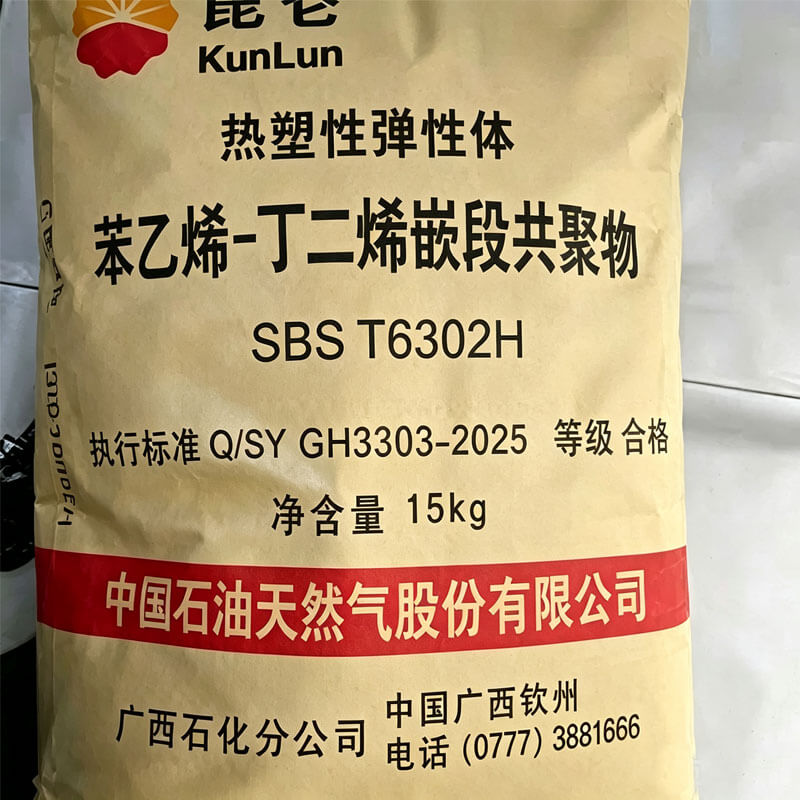
    • Product Name: Styrene‑Butadiene‑Styrene Block Copolymer SBS (T6302H)
    • Factroy Site: Qinzhou Port Economic Development Zone, Qinzhou City, Guangxi
    • Price Inquiry: sales6@ascent-chem.com
    • Manufacturer: PetroChina Guangxi Petrochemical Company
    • CONTACT NOW
    Specifications
    HS Code 608652
    Product Name Styrene-Butadiene-Styrene Block Copolymer SBS T6302H
    Polymer Type Linear SBS block copolymer
    Appearance White or light-colored porous granules
    Styrene Content 30%
    Butadiene Content 70%
    Density 0.94 g/cm³
    Shore A Hardness 75 ± 5
    Tensile Strength ≥ 15 MPa
    Elongation At Break ≥ 700%
    300 Modulus ≥ 2.0 MPa
    Volatile Content ≤ 0.7%
    Ash Content ≤ 0.2%

    As an accredited Styrene‑Butadiene‑Styrene Block Copolymer SBS (T6302H) factory, we enforce strict quality protocols—every batch undergoes rigorous testing to ensure consistent efficacy and safety standards.

    Packing & Storage
    Packing Packaged in 25 kg polyethylene-lined woven bags, palletized and stretch-wrapped for safe transport and storage.
    Container Loading (20′ FCL) Load 20′ FCL with Styrene-Butadiene-Styrene SBS T6302H in clean, dry container; secure pallets/cartons, avoid moisture, heat and contamination.
    Shipping SBS T6302H is supplied as porous pellets, packaged in moisture-proof bags or octabins. Ship in dry, ventilated containers, avoiding excessive heat and direct sunlight. Handle gently to prevent bag damage and dust generation. Store away from oxidizers and ignition sources. No dangerous goods classification under standard transport regulations; ensure proper containment during transit.
    Storage Store SBS (T6302H) in its original, unopened packaging in a cool, dry, well-ventilated area. Protect from direct sunlight, UV radiation, ozone, moisture, and heat sources. Keep away from sparks, flames, and oxidizing materials. Under proper conditions, shelf life is typically two years. Avoid compression or stacking that may deform the pellets.
    Shelf Life Shelf life is typically two years from production when stored unopened in a cool, dry, well-ventilated area away from sunlight and moisture.
    Application of Styrene‑Butadiene‑Styrene Block Copolymer SBS (T6302H)
    In paving-grade bitumen modification, the base binder is selected before the SBS is weighed. A 70/100 penetration-grade bitumen with a maltene phase sufficient to swell the polybutadiene midblock is brought to 175–185 °C in a vertical mixing vessel. SBS T6302H is introduced into a rotor-stator mill with a tip speed of 15–25 m/s after the binder moisture content has been reduced to below 0.2 %. Premature addition into wet bitumen produces steam voids and a local viscosity spike at the mill inlet. The polymer dosage is held between 4.0 wt% and 6.0 wt% for heavy-duty wearing courses. Lower dosages of 2.5 wt% to 3.5 wt% are used only in secondary roads where rutting resistance is not the primary specification. The batch is circulated through the high-shear mill until a phase inversion is identified by a rise in softening point measured by ASTM D36 and by an increase in elastic recovery measured by ASTM D6084. A critical processing boundary exists above 190 °C. At that temperature the unsaturated polybutadiene midblock undergoes chain scission and oxidative gelation in the presence of air. The observable result is not a simple viscosity loss but a bimodal viscosity curve during day-tank storage, measured by ASTM D4402 at 135 °C. The binder is held in a day tank with continuous low-shear agitation and a nitrogen blanket to prevent surface skinning.Storage stability is tested by EN 13399:2018. Batch-to-batch variance in the lot’s diblock content shifts the time to reach the target elastic recovery by 10–20 min on a 20 000 L production vessel. A diblock fraction above the certificate of analysis limit develops elasticity earlier but increases the sensitivity to storage separation. A diblock fraction below the limit requires longer milling but may not achieve the specified softening point. The modified binder is graded under AASHTO M320 using dynamic shear rheometer data from AASHTO T315. The upper continuous grade depends on the base bitumen chemistry and the polymer dosage, not solely on the grade name T6302H. Published data for full-scale milling kinetics of T6302H in road binders is limited; the above operating ranges derive from linear SBS grades with a nominal 30 wt% styrene content.
    Specification matrix referenced when T6302H is used in paving-grade bitumen
    PropertyTest methodPractical control function
    Softening pointASTM D36Indirect rutting resistance under traffic load
    Penetration at 25 °CASTM D5Workability and low-temperature cracking balance
    Elastic recoveryASTM D6084Confirms SBS network formation after shearing
    Rotational viscosity at 135 °CASTM D4402Pumping and storage threshold control
    Storage stabilityEN 13399:2018Phase-separation tendency after 72 h at 180 °C
    Flash pointASTM D92Hot-mix plant safety

    What Governs Mixing Viscosity in SBS-Based HMPSAs?

    Mixing of hot-melt pressure-sensitive adhesives based on SBS T6302H is performed at 150–170 °C in a sigma-blade mixer or in a twin-screw extruder with an L/D ratio between 32:1 and 40:1. The addition sequence determines whether the elastomer forms a continuous elastic phase or a dispersed plastic phase. The elastomer is first masticated with a portion of the naphthenic process oil until the torque curve stabilizes. A C5 aliphatic tackifier resin is then added at 40–80 phr. A rosin ester or terpene phenol resin may be introduced at 5–15 phr to associate with the polystyrene endblocks. If the endblock-resin interaction is insufficient, the formulation loses cohesive strength and the 180° peel profile measured by ASTM D903 shifts from cohesive failure to adhesive failure. Mixing viscosity is measured by ASTM D3236 at 180 °C using a Brookfield Thermosel. Values above 8 Pa·s can exceed the hydraulic limit of a slot-die coating line with a 0.5 mm shim. Values below 1.5 Pa·s usually indicate oil-induced phase separation. The oil type is restricted to naphthenic or low-aromatic white oils. Aromatic extracts swell the polybutadiene segment and reduce the upper service temperature. The upper service temperature is measured by shear adhesion failure temperature according to ASTM D4498. A high-softening-point C5 resin raises SAFT but also raises viscosity at 180 °C. A low-softening-point resin depresses loop tack measured by ASTM D6195. A reference formulation of 100 phr T6302H, 70 phr of a 100 °C softening point C5 resin, 25 phr naphthenic oil, and 1 phr hindered phenol antioxidant yields a viscosity range of 2.5–6.0 Pa·s across laboratory batches when the mixer is not nitrogen-blanketed. With nitrogen blanketing, the same formulation retains 3.0 Pa·s for 6 h. Without blanketing, surface oxidation raises torque and darkens the melt. The screw profile uses a mild kneading block section after the main feed followed by a low-shear conveying section. Kneading block length above 15 % of total screw length raises melt temperature by 12–18 °C and initiates gel particles.On a torch-applied modified bitumen membrane line, the SBS-bitumen blend is held at 170–180 °C in a thermostated mixing kettle. The base is an unoxidized or oxidized bitumen with a penetration of 100–160 dmm and a softening point of 35–45 °C. T6302H is pre-swollen in a naphthenic oil at 15–25 phr before being metered into the mixer. This two-step swelling prevents dry elastomer lumps from fouling the saturation line’s doctor bar. The mix is then filled with ground calcium carbonate at 20–30 wt%. The filler raises low-shear viscosity but increases the low-temperature flexural modulus. Low-temperature flexibility is evaluated after heat aging by EN 1109, which specifies a mandrel bend at sub-zero temperatures. The membrane’s tensile strength and elongation are measured by ASTM D412 or EN 12311-1. Typical control ranges for an SBS-modified cover mass are a softening point of 95–110 °C measured by ASTM D36 and a penetration of 20–40 dmm by ASTM D5. The processing bottleneck occurs at the calender. If the compound temperature falls below 150 °C, the viscosity increases sharply and the polyester or glass-fleece carrier can be distorted. If the compound temperature exceeds 190 °C, the SBS degrades and low-temperature flexibility drops even though the softening point may remain unchanged. The saturation tank is nitrogen-blanketed and the residence time is maintained below 4 h. Filler moisture content above 0.5 % produces pinholes during torch application. The finished membrane is tested for dimensional stability by EN 1107-1. The application temperature on a torch-applied roof is governed by the cover mass softening point, not by the grade designation of the SBS.

    Footwear Soling Compounds and the Upper Bound of Screw Shear Heating

    Injection molding of footwear soling compounds based on SBS T6302H is performed at melt temperatures between 170 °C and 195 °C using a reciprocating-screw machine with a clamp force of 120–250 tonnes for multi-cavity sole molds. The compound consists of T6302H 100 phr, general-purpose polystyrene 30–50 phr, naphthenic oil 20–40 phr, calcium carbonate 10–30 phr, and a hindered phenol-phosphite antioxidant package at 0.5–1.0 phr total. The polystyrene increases hardness and melt flow but narrows the processing window. At polystyrene levels above 50 phr the melt becomes too viscous at 180 °C. At oil levels above 40 phr the compound loses abrasion resistance. Hardness is measured by ASTM D2240 on the Shore A scale after 15 s. Tear strength is measured by ASTM D624 die C. Tensile strength is measured by ASTM D412. The critical failure mode on injection lines is screw shear heating. In a screw with an L/D ratio of 20:1 and a compression ratio of 2.5:1, a back pressure setting above 15 bar in the holding phase can increase melt temperature by 8–12 °C beyond the barrel setpoint. If the melt temperature reaches 200 °C, the polybutadiene midblock oxidizes. The visible effect is brown streaking and reduced elongation at break. Mold cooling water is maintained at 8–12 °C for cycle times of 25–40 s on soles with a wall thickness of 8–12 mm. The mold surface is vented to prevent gas burns at the toe area. In microcellular soling, a chemical blowing agent such as 4,4′-oxybis(benzenesulfonyl hydrazide) is used at 1–2 phr. The decomposition gas is released at 150–160 °C. If the compound is processed above 180 °C, the blowing agent decomposes before the mold is sealed and the cell structure collapses. Density is measured by ISO 2781. A blown SBS sole with a density of 0.6–0.8 g/cm³ remains flexible but loses 25–40 % of its tensile strength compared with a solid SBS sole of the same hardness. This trade-off is controlled by the injection pressure profile.For low-polarity solvent-borne sealants, SBS T6302H is dissolved in a blend of cyclohexane, methyl ethyl ketone, and acetone at solids contents between 15 wt% and 25 wt%. The dissolution order is critical. The elastomer is added to the cycloaliphatic fraction first under slow agitation. The polar ketone is added only after the polystyrene endblocks are fully solvated. If the polar ketone is added too early, the polystyrene domains collapse and the batch forms a grain-like suspension that cannot be filtered. The solution is then compounded with a hydrocarbon tackifier resin at 25–50 phr and a hindered amine light stabilizer at 0.2–0.5 phr. Viscosity is measured by Brookfield at 25 °C using spindle 4 at 12 rpm. A target of 1500–4000 mPa·s is typical for cartridge nozzle extrusion. The sealant is applied to construction joints and must pass movement capability tests under ASTM C920. The cured film shrinks as the solvent evaporates. Shrinkage above 20 % causes cohesive failure at the bond line. Low-temperature flexibility of the dried film is checked by a bend test at −20 °C. The limitation of this solvent-borne route is the long tack-free time and the volatile organic compound content. In jurisdictions following 2004/42/EC, the formulation must be reformulated to a waterborne or hot-melt system. The solvent solubility parameters of SBS T6302H are not interchangeable with SIS. Replacement of SIS with SBS in a solvent-borne system lowers tack but raises shear resistance. The application is therefore limited to non-pressure-sensitive joint sealants and laminating adhesives.

    When SBS T6302H Replaces a Portion of Impact Modifier in Polystyrene Compounding

    When SBS T6302H is evaluated as an impact modifier in general-purpose polystyrene, the material is dry-blended at 5–15 wt% before being fed into a twin-screw extruder with a 40:1 L/D ratio. The barrel profile is set from 170 °C in the first zone to 195 °C at the die. Screw speed is held at 250–400 rpm. Under these conditions the SBS phase is dispersed into submicron to micron-sized domains. The notched Izod impact strength is measured by ISO 180/A or ASTM D256. At 10 wt% SBS, the increase in impact strength is largest when the extruder screw contains two high-shear mixing sections rather than one. However, if the melt temperature at the vent port exceeds 210 °C, the impact modifier begins to crosslink and the melt flow rate measured by ISO 1133-1:2022 at 200 °C with a 5 kg load falls below the injection molding requirement. The melt flow rate is a better processability index than impact strength because it detects incipient gel formation before mechanical properties show a drop. The compound may be used in appliance housings and office machine covers where UL 94 HB is the minimum flame class. SBS reduces stiffness and heat deflection temperature. The flexural modulus measured by ISO 178 decreases by 10–20 % at 10 wt% addition. The heat deflection temperature measured by ISO 75-2/A decreases by 3–7 °C. These losses are acceptable only in non-load-bearing parts. If the application requires a UL 94 V-0 class, the SBS loading is limited to 5 wt% because the halogenated flame retardant and antimony trioxide package interacts with the unsaturated polybutadiene block and increases smoke density. In those cases SBS T6302H is not the first choice; the formulation switches to a saturated block copolymer. Published data for T6302H in flame-retardant polystyrene compounds is limited.
    Related Articles
    Free Quote

    Competitive Styrene‑Butadiene‑Styrene Block Copolymer SBS (T6302H) prices that fit your budget—flexible terms and customized quotes for every order.

    For samples, pricing, or more information, please contact us at +8618018036652 or mail to sales6@ascent-chem.com.

    We will respond to you as soon as possible.

    Tel: +8618018036652

    Email: sales6@ascent-chem.com

    Inquiry

    Get Free Quote of PetroChina Guangxi Petrochemical Company

    Flexible payment, competitive price, premium service - Inquire now!

    Certification & Compliance
    More Introduction

    Styrene‑butadiene‑styrene block copolymer grade T6302H is a linear triblock thermoplastic elastomer in which terminal polystyrene end blocks form glassy physical crosslinks dispersed within a continuous polybutadiene midblock phase. The product is supplied as crumb or porous pellet and is processed without sulfur vulcanization; strength develops when the polystyrene domains re-harden after melt processing or solvent evaporation. At service temperatures below the polystyrene glass transition of approximately 95 °C, the hard domains restrain chain flow and provide tensile strength, whereas above the processing temperature the domains soften and permit thermoplastic flow. The grade designation T6302H denotes a producer-specific linear SBS with bound styrene content near 30 wt% and butadiene content near 70 wt%. The linear architecture lowers melt viscosity relative to radial SBS grades of equivalent styrene content but retains adequate tensile strength for high-elongation elastomeric applications. The unsaturated polybutadiene midblock requires antioxidant protection during high-temperature processing and is not directly interchangeable with hydrogenated SEBS in oxidation-critical service. Regulatory declarations are usually supplied against REACH Regulation (EC) No 1907/2006 and RoHS Directive 2011/65/EU; direct food-contact suitability is not assumed and must be confirmed against FDA 21 CFR 177.1810 with supplier migration data.

    What Distinguishes T6302H from Conventional Linear SBS Grades?

    The most consequential structural variable is bound styrene content. T6302H at 30 wt% styrene has a lower hard-domain volume fraction than 40 wt% styrene SBS grades used for rigid compounds; Shore A hardness is typically 68–78 rather than 80–90, and tensile strength is lower under ASTM D638-14. The higher butadiene content shifts low-temperature flexibility of bituminous sheets to approximately -15 °C to -20 °C under EN 12311-1, whereas higher-styrene grades may embrittle at higher temperatures. Compared with radial SBS grades at the same styrene content, the linear architecture of T6302H produces lower melt flow resistance and lower solution viscosity at equivalent molecular weight, but lower green strength and ultimate tensile strength. Oil-extended SBS grades, which contain 30–50 phr of naphthenic or paraffinic extender oil, exhibit lower hardness and lower compound cost but dilute the load-bearing network; T6302H is neat polymer, so extender selection is controlled independently. SEBS grades are hydrogenated and withstand continuous service temperatures roughly 30–50 °C higher than unsaturated SBS, but require higher melt temperatures and do not offer the same compatibility with bitumen or the same specific adhesion from the unsaturated midblock.

    Architecture and typical property comparison
    Grade category Molecular architecture Typical bound styrene Relative melt flow at constant molecular weight Tensile strength trend
    T6302H Linear triblock 30 wt% Medium–high Medium
    Radial SBS Star-branched triblock 30–40 wt% Low High
    Oil-extended SBS Linear or radial with extender oil 30–40 wt% High Low–medium
    SEBS Hydrogenated linear triblock 30–40 wt% Medium Medium–high

    Incoming quality-control laboratories typically verify the following property windows against the producer’s certificate of analysis. Tensile specimens are compression-moulded and conditioned for 24 h at 23 °C and 50 % relative humidity before testing. Melt flow rate is determined with a dead-weight capillary rheometer at 200 °C and 5 kg load. Volatile matter is measured by hot-air loss at 105 °C, and ash by calcination at 550 °C. Hardness is read after 15 s on a Shore A durometer. The table lists representative acceptance windows for the grade.

    T6302H representative specification data
    Property Test method Typical range
    Bound styrene Infrared spectroscopy per ISO 2453 30 ± 1.5 wt%
    Volatile matter Hot-air loss, 105 °C 0.7 wt%
    Ash Calcination, 550 °C 0.2 wt%
    Melt flow rate ISO 1133-1:2022, 200 °C, 5 kg 0.5–3.0 g/10 min
    Tensile strength ASTM D638-14, 500 mm/min 18.0 MPa
    Elongation at break ASTM D638-14, 500 mm/min 700 %
    Modulus at 300 % elongation ASTM D638-14 2.5 MPa
    Shore A hardness ASTM D2240-15, 15 s 68–78

    When the grade is sourced from alternate production lines or stored beyond the producer’s recommended shelf life, antioxidant depletion may shift the melt flow rate upward and reduce tensile strength. Published data for this specific configuration under extended warehouse aging is limited; therefore, batch qualification is recommended before direct substitution into existing formulations. Batch-to-batch variation in melt flow rate from 0.5 g/10 min to 3.0 g/10 min can alter screw torque and die pressure in compounding, so incoming MFR should be trended against the supplier’s reference lot.

    When T6302H Is Melt-Compounded into Polyolefin Matrices

    Pre-drying is not normally required for closed, freshly opened packages. If storage relative humidity exceeds 60 % or if the crumb has been exposed to ambient air for more than 24 h, surface moisture is removed at 60–70 °C for 2 h with a desiccant or hot-air hopper dryer having a dew point below -20 °C. Twin-screw compounding generally uses a co-rotating twin-screw extruder with L/D ratio of at least 36:1. Barrel temperatures from the feed zone to the die are profiled from 140 °C to 190 °C, and the die is held below 210 °C. Residence time above 190 °C is kept below 8 min; prolonged exposure causes gel formation through radical crosslinking of the butadiene midblock and increases die pressure. On a 75 mm co-rotating twin-screw line, a melt-temperature excursion from 195 °C to 225 °C often correlates with a die-pressure increase of 0.5–1.5 MPa and visible gel particles in the extruded strand. Specific mechanical energy input is typically held below 0.25 kWh/kg; higher input can create local hot spots above 230 °C even when barrel set-points remain lower. Nitrogen blanketing of the feed throat is applied on some production lines to reduce oxidative degradation.

    Polypropylene and polyethylene are not thermodynamically miscible with SBS. Without a compatibilizer, T6302H disperses as a discrete elastomer phase and improves impact toughness while reducing flexural modulus and tensile yield strength. For polypropylene toughening, addition of 10–20 wt% T6302H typically lowers the notched Izod impact transition temperature as measured by ISO 180:2023, while tensile yield strength decreases under ISO 527-2:2012 and flexural modulus decreases under ISO 178:2019. The exact balance depends on extruder screw configuration, cooling rate after moulding, and particle-size distribution. In compounds where stiffness is controlled, a portion of the polypropylene is replaced with polystyrene or a styrenic block compatibilizer to increase interfacial adhesion with the polystyrene end blocks of T6302H.

    In bituminous waterproofing membrane and road-paving operations, T6302H is introduced into molten bitumen at 4–6 wt% based on final binder mass. The mixing vessel is a rotor-stator high-shear mixer operating at a tip speed of 15–25 m/s with the bitumen held at 170–185 °C. Mixing continues for 45–90 min until the polymer phase is dispersed below approximately 10 µm; larger particles are associated with storage instability and incomplete property development. The modified binder is evaluated for softening point under ASTM D36, penetration at 25 °C under ASTM D5, elastic recovery under ASTM D6084, and storage stability under ASTM D7175. The lower styrene content of T6302H increases compatibility with the aromatic and resin fractions of bitumen relative to 40 wt% styrene SBS grades but reduces the high-temperature softening point increment at equal dosage. This shifts the performance balance toward low-temperature flexibility and elongation recovery rather than maximum rutting resistance. For waterproofing membranes, a blend of T6302H, bitumen, and mineral filler is calendered or extruded into a modified-bitumen sheet; the sheet is tested for low-temperature flexibility at -15 °C to -20 °C and for tensile properties under ASTM D638-14 or EN 12311-1.

    Solvent-borne contact adhesives based on T6302H are prepared by dissolving the crumb in toluene, cyclohexane, or a toluene–ethyl acetate blend at 20–35 wt% solids. Dissolution is performed in a low-shear anchor mixer at 25–50 °C for 4–8 h until Brookfield viscosity at 25 °C stabilizes, typically in the range 1,500–8,000 mPa·s depending on solvent type and solids content. The linear architecture gives lower solution viscosity than radial SBS grades at equivalent solids, which improves sprayability but reduces loop tack strength in tests performed under ASTM D6195. Formulations usually add tackifying resins such as rosin esters or C9 hydrocarbon resins at 20–40 phr on polymer; the resin is selected to control open time and to avoid surface bloom. Because the material is thermoplastic rather than chemically vulcanized, final bond strength develops through solvent evaporation and reformation of the polystyrene domains; no vulcanization kinetics are involved, but open time and hard-domain reformation rate depend on solvent volatility and ambient temperature. The dried film is protected against long-term ozone exposure because the unsaturated butadiene midblock remains oxidatively sensitive. Amine-based curatives are avoided to prevent premature crosslinking and solution gelation.

    In unit sole and midsole formulations, T6302H is compounded with general-purpose polystyrene, paraffinic or naphthenic oil, and silica or calcium carbonate fillers. A typical starting formulation contains 100 phr T6302H, 20–40 phr polystyrene, 30–50 phr naphthenic oil, and 5–15 phr filler, adjusted to a target hardness of 55–75 Shore A. Mixing on a 75 L internal mixer at 150–170 °C is followed by sheeting on a two-roll mill and subsequent injection moulding or compression moulding. Injection moulding uses barrel temperatures from 160 °C to 195 °C, mould temperatures from 20 °C to 40 °C, and a shrinkage allowance of 0.5–1.2 %. Compared with radial SBS grades, T6302H provides easier mould filling but lower tensile strength and lower abrasion resistance measured under DIN 53516; it is therefore selected for thick-section soles and overmoulded components where flow length is the limiting factor rather than ultimate tear strength. Oil exudation is controlled by the aromatic–naphthenic balance of the extender and by shear history; oil migration kinetics in the polymer matrix determine the acceptable oil loading before surface bloom occurs within 7 days at 23 °C.