Polystyrene (PS)

    • Product Name: Polystyrene (PS)
    • Factroy Site: Qinzhou Port Economic Development Zone, Qinzhou City, Guangxi
    • Price Inquiry: sales6@ascent-chem.com
    • Manufacturer: PetroChina Guangxi Petrochemical Company
    • CONTACT NOW
    Specifications
    HS Code 164602
    Chemical Formula C8H8 (monomer); (C8H8)n (polymer)
    Density 1.04-1.06 g/cm³
    Tensile Strength 35-50 MPa
    Flexural Modulus 3000-3500 MPa
    Izod Impact Strength Notched 10-25 J/m
    Elongation At Break 1-3%
    Hardness Rockwell M 65-80
    Glass Transition Temperature ~100 °C
    Heat Deflection Temperature 70-100 °C at 1.82 MPa
    Thermal Conductivity 0.14 W/(m·K)
    Water Absorption 24h 0.03-0.10%
    Refractive Index 1.59
    Dielectric Constant 2.4-2.7 at 1 MHz
    Dielectric Strength 20-25 kV/mm
    Volume Resistivity 10^16 ohm·cm
    Chemical Resistance Resistant to acids, alkalies, and alcohols; susceptible to hydrocarbons and solvents
    Uv Resistance Poor; yellows and degrades with prolonged exposure
    Solubility Soluble in aromatic and chlorinated solvents

    As an accredited Polystyrene (PS) factory, we enforce strict quality protocols—every batch undergoes rigorous testing to ensure consistent efficacy and safety standards.

    Packing & Storage
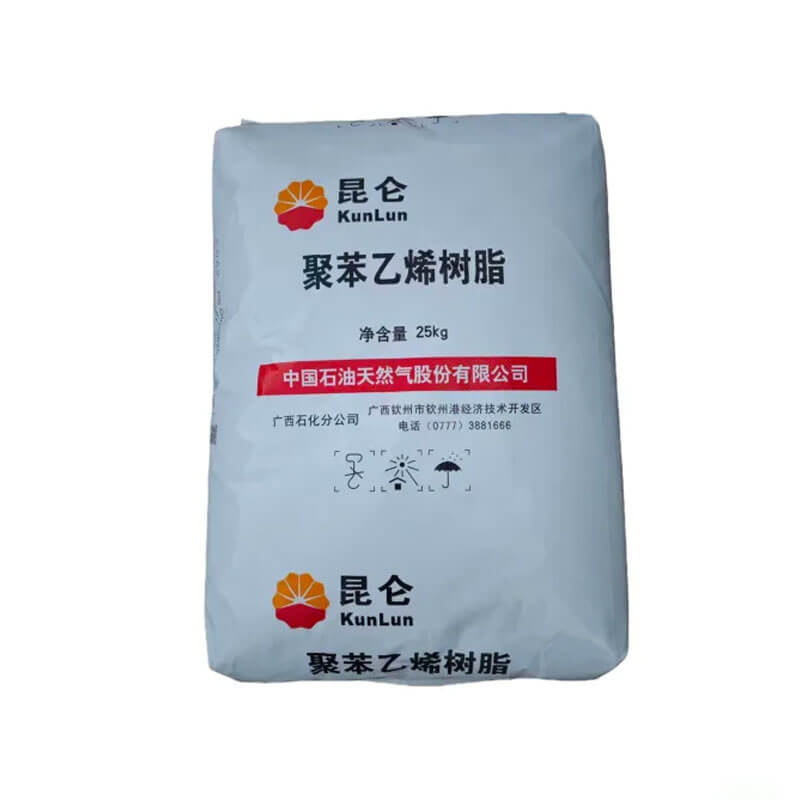
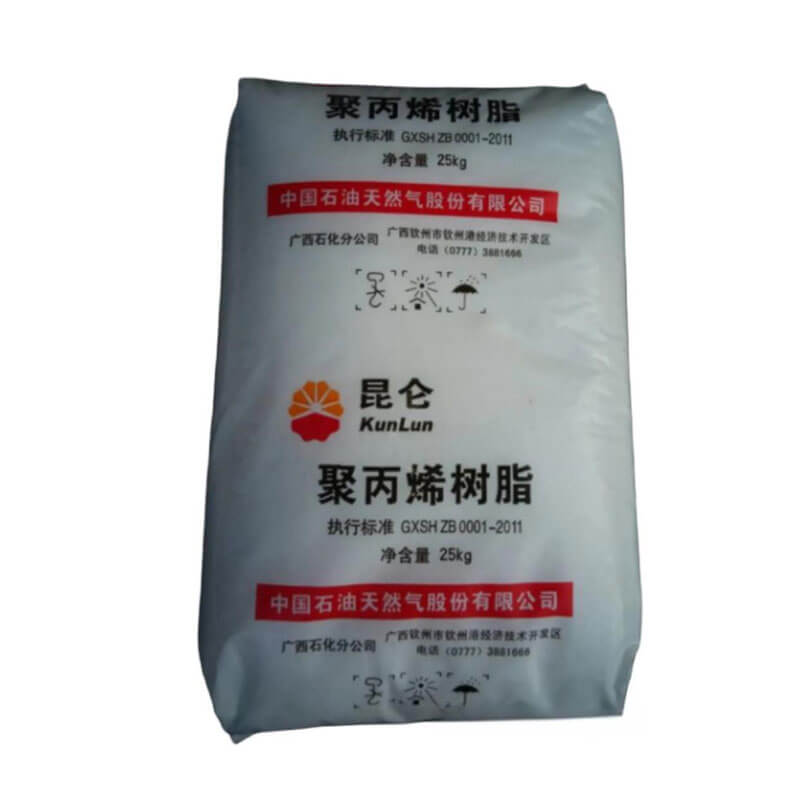
    Packing Polystyrene (PS) supplied as virgin pellets in 25 kg moisture-proof polyethylene-lined paper bags, palletized and shrink-wrapped.
    Container Loading (20′ FCL) Polystyrene (PS) packed in bags, loaded and secured in a 20-foot FCL container, protected from moisture and damage.
    Shipping Polystyrene (PS) is typically shipped as solid resin pellets or granules in sealed multi-wall paper bags, FIBC bulk bags, or hopper trucks. It is not classified as dangerous goods under most regulations. Protect from moisture, heat, and contamination; avoid dust accumulation and static ignition sources during handling.
    Storage Store polystyrene (PS) in a cool, dry, well-ventilated area away from ignition sources, open flames, and direct sunlight. Keep containers tightly sealed to prevent contamination and moisture uptake. Avoid creating airborne dust, which can form explosive mixtures. Maintain temperatures below 30°C and separate from oxidizing agents.
    Shelf Life Polystyrene (PS) has an indefinite shelf life when stored cool, dry, and dark, away from UV and heat.
    Application of Polystyrene (PS)

    When expanded polystyrene bead moulding is selected for external wall insulation and appliance cushioning, the incoming bead must be graded for n-pentane content controlled at 4.5 wt% to 6.5 wt%; below 4.2 wt%, pre-expansion becomes non-uniform on continuous pre-foamers, while above 6.8 wt% residual blowing agent can lift block density above the specified building-product range of 15 kg/m³ to 35 kg/m³. The bead is pre-expanded with saturated steam at 95°C to 105°C in a vertical or horizontal continuous pre-foamer with paddle agitation, then aged in aerated silos for 12 h to 24 h to equilibrate internal vacuum and pentane concentration before moulding. Moulding is performed in block moulds with steam pressure 0.7 bar to 1.0 bar at cavity temperatures 110°C to 120°C, often with vacuum assist on the mould cavity to reduce cycle time and water retention. Where fire performance is specified, a polymeric brominated flame-retardant masterbatch is added at 0.8 wt% to 2.0 wt%, and zinc stearate as nucleating and release agent is added at 0.2 wt% to 0.4 wt%. Compliance for thermal boards is assessed under EN 13163 for dimensional tolerance, compressive stress at 10% deformation, and declared thermal conductivity at 10°C; reaction-to-fire classification under EN 13501-1 is typically Euroclass E for the raw board, while the facade assembly defines the system rating. In North America, ASTM C578 Type I and Type VIII grades govern density and compressive properties. Terminal parts include expanded polystyrene insulation boards, void formers for concrete, geofoam blocks, and cushioning packs for refrigerators, washing machines, and medical diagnostic equipment.

    What Limits the Rubber Phase Loading in HIPS Sheet for Refrigerator Door Liners?

    The rubber phase loading in high-impact polystyrene sheet for refrigerator door liners is constrained by the opposing requirements of low-temperature impact resistance and melt-phase uniformity during deep-draw thermoforming. Commercial HIPS grades for this application contain a polybutadiene rubber phase in the range of 6 wt% to 10 wt%, with extrusion grades at 4 wt% to 6 wt% for high-gloss shallow parts and 8 wt% to 10 wt% for deep-door liners; each additional increment of rubber raises notched Izod impact but lowers melt-flow and increases sheet orientation memory. Mineral oil is used at 1 wt% to 3 wt% to recover flow and improve sheet surface wet-out, but above 3 wt% the oil migrates to the sheet surface and causes polishing-stack plate-out, which appears as optical haze on the liner surface. Antioxidant packages are added at 0.1 wt% to 0.5 wt% to prevent thermoforming degradation at the 210°C to 245°C melt-temperature window. The sheet is extruded on a single-screw extruder with an L/D ratio of 30:1 to 34:1, a barrier screw, and a polishing roll stack held at 70°C to 90°C, producing sheet of 2.0 mm to 5.0 mm thickness. Thermoforming on rotary or shuttle machines requires sheet surface temperature of 140°C to 165°C and aluminium or epoxy mould temperature of 60°C to 80°C; plug-assist with syntactic foam or POM plugs is used to redistribute material into door liner corners. Deep-draw ratios above 0.5:1 with high-rubber grades can produce webbing and uneven sidewall gloss, a batch-to-batch process bottleneck on refrigerator-liner lines. The relevant safety standard is IEC 60335-1, with UL 94 HB flame rating recognised for the raw material; REACH Candidate List restrictions and RoHS Directive 2011/65/EU Annex II also apply to the final component. Terminal products include refrigerator door liners, freezer inner liners, crisper trays, and internal appliance shelves.

    Butadiene rubber phaseMelt flow rate (200°C/5 kg)Notched Izod impact (23°C)Tensile yield stress
    4-6 wt%5-8 g/10 min6-9 kJ/m²26-30 MPa
    7-9 wt%3-5 g/10 min10-14 kJ/m²20-24 MPa
    10-12 wt%1.5-3 g/10 min15-20 kJ/m²16-20 MPa

    For inverted roofing and below-grade waterproofing systems, extruded polystyrene foam board production requires a tandem extrusion line because the blowing agent must be dispersed at high pressure but the melt temperature must then be lowered before board forming to prevent premature expansion. The formulation comprises base polystyrene resin, a blowing agent system at 5 wt% to 8 wt%, talc nucleating agent at 0.5 wt% to 1.5 wt%, flame-retardant additive at 0.5 wt% to 2.0 wt%, and colorant or infrared blocker at 0.1 wt% to 0.5 wt%. The primary extruder operates at 190°C to 220°C with an L/D ratio of 34:1 to 48:1, while the secondary cooling extruder discharges into a slit die with die pressure between 80 bar and 150 bar; the foam expands after the die and is drawn through a vacuum calibrator to form boards 20 mm to 200 mm thick at densities of 25 kg/m³ to 45 kg/m³. A skin is formed on both faces, which improves water resistance and compressive strength. Production lines are subject to thickness variation when the talc concentration drops below 0.4 wt% because cell nucleation becomes sporadic and large voids create compressive-strength scatter. Thermal insulation boards for building application are covered by EN 13164, which requires declared thermal conductivity, compressive strength at 10% deformation, and dimensional stability; North American material specification is ASTM C578 Type VI or Type X depending on compressive resistance. Fire classification under EN 13501-1 is typically Euroclass E for exposed XPS board, and end-use building systems must account for the insulation position in roof or inverted roof assembly. Terminal parts include inverted roof insulation boards, below-grade foundation boards, cold storage wall and ceiling panels, and perimeter insulation for slab-on-grade construction.

    GPPS Melt Flow Ratios Govern Thin-Wall Diagnostic Pipette Moulding

    Thin-wall diagnostic consumables made from general purpose polystyrene are moulded from resin with a melt flow rate close to 7 g/10 min to 15 g/10 min under ASTM D1238-20 at 200°C/5 kg, because wall sections below 1.0 mm demand high melt-front velocity without excessive orientation. The compound for optically clear disposables comprises GPPS resin at 99.4 wt% to 99.7 wt%, zinc stearate as an external lubricant and de-moulding aid at 0.2 wt% to 0.4 wt%, and an internal antistatic additive at 0.1 wt% to 0.3 wt%; no rubber modifier is included because haze and birefringence are not acceptable in cuvettes and multi-well plates. Injection moulding is conducted at melt temperatures of 220°C to 260°C, mould temperatures of 40°C to 60°C, and injection pressures of 800 bar to 1 500 bar; a general-purpose screw with an L/D ratio of 20:1 and a non-return valve is typical, while clamp force is calculated at 3 tons to 5 tons per square inch of projected area for thin-wall multi-cavity tools. The moulding shrinkage range is 0.4% to 0.7%, which is controlled by holding pressure and gate freeze time. Medical and diagnostic applications require compliance with ISO 13485:2016 for device manufacturing quality systems, and the polymer is evaluated under ISO 10993-1:2018 for biological risk, with cytotoxicity testing under ISO 10993-5:2009; United States Pharmacopeia Class VI raw-material certification is often requested for disposables in diagnostic workflows. Sterilization by gamma irradiation at 25 kGy is possible but produces measurable yellowing, so electron-beam or ethylene-oxide cycles are preferred when optical clarity is critical downstream. Terminal products include diagnostic cuvettes, petri dishes, multi-well plates, serological pipette carriers, and sample cups for hematology analyzers.

    Oriented Polystyrene Sheet Compliance Limits for Fat-Containing Dairy Contact

    For dairy cups and bakery trays, oriented polystyrene sheet is produced from a formulation in which general purpose polystyrene resin accounts for 96 wt% to 100 wt%, a butadiene-styrene block copolymer is added at 2 wt% to 5 wt% to reduce container flange cracking, and mineral oil is added at 0.5 wt% to 2.0 wt% to adjust the glass transition and facilitate orientation; a slip and antiblock masterbatch is added at 0.5 wt% to 2.0 wt% to control film blocking. Sheet extrusion is performed at melt temperatures of 230°C to 250°C through a flat die with a gap between 0.4 mm and 1.0 mm, cast onto polishing rolls at 60°C to 90°C, and then oriented in the machine direction at a ratio of 6:1 to 10:1 and in the transverse direction at 4:1 to 6:1; heat-setting ovens are held at 100°C to 120°C to control shrinkage. The final sheet thickness is 0.2 mm to 1.0 mm, with thermoforming on in-line or roll-fed equipment at sheet surface temperatures of 120°C to 140°C. Food-contact compliance is anchored to FDA 21 CFR 177.1640 for polymerised styrene and to EU Regulation (EU) No 10/2011 Annex I, with an overall migration limit of 10 mg/dm² under the relevant food-simulant test condition. Processing limitation: oriented polystyrene retains sufficient residual stress that exposure above 85°C triggers secondary shrinkage, so it is not suitable for microwave reheat or hot-fill above 80°C. Terminal products include dairy yoghurt cups, bakery and patisserie containers, deli trays, salad bowls, and transparent thermoformed lids.

    Reference / methodConditionLimit
    FDA 21 CFR 177.1640Food contact use conditions A–HNo migration above regulatory threshold
    EU No 10/2011 Annex IOML, food simulant 3 h/70°C or 10 days/40°C depending condition10 mg/dm²
    EN 1186-1Simulant selection and migration testCompliance with OML

    When Thin-Wall HIPS Enclosures Replace ABS in Printer and Audio Housing Applications

    When thin-wall HIPS enclosures are specified for printer side covers and audio amplifier front panels, the material is selected at the boundary between cost, sound-damping, and impact resistance; ABS is replaced only where continuous service temperature is below 70°C because HIPS has a Vicat softening point in the 85°C to 100°C range. The injection-moulding compound comprises high-impact polystyrene resin at 85 wt% to 95 wt%, with the rubber phase already present in the resin at 5 wt% to 12 wt%; a flame-retardant masterbatch is added at 8 wt% to 15 wt% when UL 94 V-2 verification is required, and a lubricant package is added at 0.1 wt% to 0.5 wt% to improve release from textured mould surfaces. Moulding is performed at melt temperatures of 218°C to 260°C and mould temperatures of 30°C to 50°C; clamp force is calculated at 3 tons to 5 tons per square inch of projected area, and a general-purpose screw with an L/D ratio of 20:1 is used. Drying is not required below 60% ambient relative humidity, but at RH above 70% the resin should be dried for 2 h to 3 h at 70°C to 80°C to avoid surface splay. Compliance for office and audio equipment is assessed under IEC 62368-1 for safety, UL 94 V-2 or HB for flame rating, RoHS Directive 2011/65/EU Annex II for restricted substances, and REACH Candidate List obligations for the moulder. A known limitation is UV exposure: unpigmented HIPS yellows and embrittles outdoors, so coloured or painted grades are used for visible surfaces. Terminal products include printer side covers, audio amplifier front panels, router housings, remote control shells, and non-load-bearing display bezels for office equipment with service temperatures below 70°C.

    Related Articles
    Free Quote

    Competitive Polystyrene (PS) prices that fit your budget—flexible terms and customized quotes for every order.

    For samples, pricing, or more information, please contact us at +8618018036652 or mail to sales6@ascent-chem.com.

    We will respond to you as soon as possible.

    Tel: +8618018036652

    Email: sales6@ascent-chem.com

    Inquiry

    Get Free Quote of PetroChina Guangxi Petrochemical Company

    Flexible payment, competitive price, premium service - Inquire now!

    Certification & Compliance
    More Introduction

    Polystyrene (PS) is an amorphous vinyl thermoplastic produced by free-radical polymerisation of styrene monomer. The repeating unit contains a phenyl side group that restricts chain rotation, raises the glass transition temperature to approximately 100 °C, and produces a transparent, rigid, and notch-sensitive mechanical response in the unmodified homopolymer. Because the polymer is amorphous, it exhibits no melting point; melt processing occurs above the glass transition by viscous flow. Under ISO 1043-1, the material is designated PS, while cellular forms carry the codes EPS and XPS. Commercial model nomenclature is manufacturer-specific, but the ISO 1622-1:1994 data block identifies the polymer, designated properties, and additives in a systematic sequence. Four broad product classes are available: general-purpose crystal polystyrene (GPPS), rubber-modified high-impact polystyrene (HIPS), expandable polystyrene (EPS), and extruded polystyrene foam (XPS). The common styrene backbone means that differentiation is achieved through molar mass distribution, lubricant loading, rubber particle morphology, and blowing-agent concentration rather than basic chemical structure.

    For an unfilled GPPS injection-moulding grade, density measured under ISO 1183-1:2019 is 1.04–1.06 g/cm³, tensile strength under ISO 527-2:2012 is 40–55 MPa, tensile modulus is 3.0–3.5 GPa, and nominal tensile strain at break is 1–2.5%. Melt mass-flow rate measured at 200 °C/5 kg under ISO 1133-1:2022 spans approximately 2–20 g/10 min across easy-flow and high-heat grades. Vicat B50 values under ISO 306:2022 typically lie between 90 °C and 105 °C. Heat deflection temperature under ISO 75-2:2013 at 1.8 MPa is commonly 75–90 °C. These bands are valid for natural, unfilled grades; pigments such as titanium dioxide or carbon black, mineral fillers, flame-retardant systems, and impact modifiers alter all values.

    Molecular Weight Distribution and the Mechanical Property Envelope

    GPPS exhibits light transmission above 90% at 3.2 mm thickness under ASTM D1003 but its notched Izod impact strength under ASTM D256 is only 12–20 J/m. HIPS contains phase-separated polybutadiene rubber particles with volume fractions typically between 5% and 15%; the rubber phase initiates crazing and shear yielding, raising notched Izod impact to 80–160 J/m while lowering tensile modulus to 1.6–2.5 GPa. EPS bead foam is produced at bulk densities from 0.015 g/cm³ to 0.060 g/cm³, and XPS board is produced at 0.028–0.045 g/cm³. Cellular PS products are not evaluated by tensile yield; their load-bearing response is compressive, with stress at 10% strain ranging from 150 kPa to 700 kPa for closed-cell XPS under ISO 844. Table 1 summarises the class-level property differences.

    Table 1: Class-level physical property bands for unfilled PS products
    Class Density (ISO 1183-1:2019) Key stiffness (ISO 527-2:2012 / ISO 844) Notched Izod (ASTM D256) Vicat B50 (ISO 306:2022)
    GPPS 1.04–1.06 g/cm³ 3.0–3.5 GPa 12–20 J/m 90–105 °C
    HIPS 1.03–1.06 g/cm³ 1.6–2.5 GPa 80–160 J/m 85–100 °C
    XPS 0.028–0.045 g/cm³ 150–700 kPa at 10% strain

    How Is Residual Styrene Monomer Controlled for Food-Contact Applications?

    Residual styrene monomer and low-molecular-mass oligomers are controlled in GPPS and HIPS grades intended for single-use food packaging. For food-contact applications, FDA 21 CFR 177.1640 covers polystyrene and rubber-modified polystyrene, and European Commission Regulation EU 10/2011 applies an overall migration limit of 10 mg/dm² for plastic food-contact articles. Residual styrene is removed by vacuum devolatilisation during polymerisation; grades with high residual monomer generate odour, taint, and higher specific migration measured under EN 1186-1 and EN 13130-1. Processors converting cold or ambient liquid packaging should specify low-residual grades because fatty food simulants extract styrene and oligomers from the amorphous matrix. GPPS cups and cutlery are limited to short-term contact with foods below approximately 70 °C; hot-fill and microwave environments exceed the practical heat distortion boundary of the homopolymer. When optical clarity is required in laboratory ware, gamma sterilisation is generally avoided because aromatic radical formation yellows the part; electron-beam or ethylene oxide sterilisation is preferred.

    In high-speed injection moulding of thin-wall GPPS cutlery, melt temperatures are maintained between 220 °C and 260 °C to avoid viscosity increase at the lower limit and accelerated monomer regeneration above 260 °C. Mould temperatures from 20 °C to 60 °C shorten cycle time but raise frozen-in stress; ejection cracking at the gate is a recurring failure when holding pressure is removed before the gate freezes. On production machines with clamp force from 800 kN to 2000 kN, cavity pressure during filling typically reaches 40–80 MPa, and holding pressure is stepped down over 2–5 s to compensate for linear mould shrinkage of 0.4–0.7% in GPPS. Excessive screw speed or back pressure raises shear heating and can yellow the melt surface. Single-screw sheet extrusion lines with 30:1–36:1 L/D use vacuum degassing to strip residual styrene; vent flooding and die-lip deposit are observed when throughput exceeds vent capacity. GPPS absorbs less than 0.05% moisture at 50% RH; drying at 75–80 °C for 2–4 h is necessary only after external regrind or condensation exposure. HIPS containing regrind should be dried at 80 °C for 2–3 h to avoid surface splay caused by volatilised moisture.

    HIPS flame-retardant compounds are typically compounded on co-rotating twin-screw extruders with 40:1–48:1 L/D. The melt temperature in compounding is held below 220 °C to avoid degrading the polybutadiene phase and below the decomposition threshold of halogenated flame-retardant synergists. Production-scale dilution of masterbatch can shift notched Izod impact and MFI; therefore carrier resin MFI and screw configuration are matched to the final injection-moulding grade to maintain a stable rubber particle size distribution.

    When High-Impact Polystyrene Is Screened Against ABS for Electronics Housings

    HIPS is frequently compared with acrylonitrile-butadiene-styrene (ABS) for television bezels, monitor enclosures, appliance trims, and lower-cost electronics housings. Under ISO 527-2:2012, ABS grades typically offer tensile strength of 35–50 MPa and tensile modulus of 2.0–2.8 GPa, with notched Izod impact values of 150–400 J/m by ASTM D256; HIPS typically provides tensile strength of 18–35 MPa, tensile modulus of 1.6–2.5 GPa, and notched Izod impact of 80–160 J/m. The lower heat deflection temperature of HIPS, typically 75–90 °C at 1.8 MPa, restricts its use near power supplies and lamp ballasts. ABS also has better retention of gloss and better resistance to aliphatic hydrocarbons; HIPS is preferred when cost reduction and easy flow into long thin ribs are dominant process criteria. In comparison with polypropylene, PS offers higher stiffness and transparency in the GPPS form but lacks the chemical resistance and fatigue endurance of polypropylene. In comparison with polymethyl methacrylate, GPPS offers lower cost and slightly lower density but lower surface hardness, lower scratch resistance, and much lower UV stability. Rigid PVC has higher density, better toughness, and better flame resistance, but its chlorine content complicates recycling and incineration. Flame-retardant HIPS used in electronics packaging must comply with RoHS 2011/65/EU restrictions on homogeneous-material concentrations of restricted substances to 0.1 wt%, and with UL 94 V-0 where fire safety is specified. Table 2 compares typical mechanical and thermal values across these materials.

    Table 2: Comparative property ranges for PS and selected competing thermoplastics
    Material Density (ISO 1183-1:2019) Tensile modulus (ISO 527-2:2012) Notched Izod (ASTM D256) HDT at 1.8 MPa (ISO 75-2:2013)
    GPPS 1.04–1.06 g/cm³ 3.0–3.5 GPa 12–20 J/m 75–90 °C
    HIPS 1.03–1.06 g/cm³ 1.6–2.5 GPa 80–160 J/m 75–90 °C
    ABS 1.03–1.07 g/cm³ 2.0–2.8 GPa 150–400 J/m 85–100 °C
    PMMA 1.17–1.20 g/cm³ 2.5–3.5 GPa 15–25 J/m 80–100 °C
    PP homopolymer 0.90–0.91 g/cm³ 1.1–1.8 GPa 20–60 J/m 50–65 °C
    Rigid PVC 1.35–1.45 g/cm³ 2.4–3.0 GPa 30–80 J/m 60–80 °C

    Setting Heater Zones for Uniform Wall Thickness in Plug-Assisted Forming

    GPPS and HIPS sheet are produced by flat-die extrusion and polished-roll calendering. GPPS sheet is used for clear packages, trays, blisters, and clamshells; HIPS sheet is used in refrigerator liners, bathroom wall panels, and protective packaging. The sheet is reheated to a surface temperature of 120–150 °C for GPPS and 130–160 °C for HIPS before forming. Because PS has lower melt strength than polypropylene and polyethylene terephthalate, it sags during heating; the heater zones are profiled so that the perimeter remains cooler than the centre, and plug-assisted pressure forming redistributes material into deep-draw cavities. Wall thickness variation on production lines is controlled to approximately ± 0.05 mm by zoning ceramic or quartz heaters and adjusting the plug speed. Residual stress lowers environmental stress crack resistance; a formed GPPS cup exposed to butter fat or citrus oil may craze and split under hoop stress if the sheet was overheated or stripped too cold. Unlike PET, PS provides lower oxygen and moisture barrier, so oxygen-sensitive foods require lamination or polymer coatings. Unlike polyethylene, PS does not hot-bar weld readily; ultrasonic welding, solvent bonding, and snap-fit assembly are preferred.

    Expanded and extruded cellular PS are not interchangeable with solid moulding or sheet grades. EPS bead foam is expanded with pentane and fused in block or shape moulds, with densities from 0.015 g/cm³ to 0.060 g/cm³. XPS board is extruded with a blowing agent and has closed-cell density from 0.028 g/cm³ to 0.045 g/cm³; its thermal conductivity is 0.029–0.039 W/(m·K) when measured by ISO 8301, and its compressive stress at 10% strain is 150–700 kPa under ISO 844. These foams are used in thermal insulation, structural insulated panels, fragile-goods packaging, and void fill. Flame-retardant grades containing brominated additives are required for building applications; the final assembly must satisfy local fire codes such as EN 13501-1 or ASTM E84. Polystyrene foam is incompatible with solvent-borne adhesives and coatings, and sustained service above 75 °C causes dimensional creep. External exposure without ultraviolet stabilisation produces surface yellowing and friable degradation; therefore exterior use requires cladding or acrylate-based protective films.