Polypropylene (PP)

    • Product Name: Polypropylene (PP)
    • Factroy Site: Qinzhou Port Economic Development Zone, Qinzhou City, Guangxi
    • Price Inquiry: sales6@ascent-chem.com
    • Manufacturer: PetroChina Guangxi Petrochemical Company
    • CONTACT NOW
    Specifications
    HS Code 942790
    Chemical Resistance excellent_against_acids_and_alkalis
    Uv Resistance poor_without_stabilizers
    Electrical Insulation good

    As an accredited Polypropylene (PP) factory, we enforce strict quality protocols—every batch undergoes rigorous testing to ensure consistent efficacy and safety standards.

    Packing & Storage
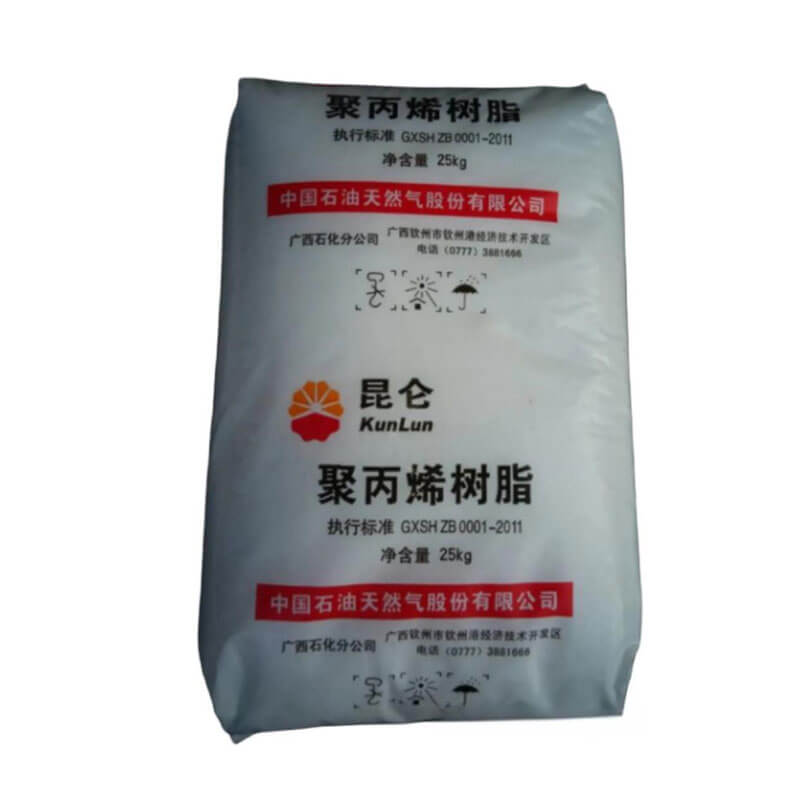
    Packing Polypropylene (PP) is packaged in 25 kg heat-sealed, moisture-proof woven bags, then palletized and stretch-wrapped for safe transport and storage.
    Container Loading (20′ FCL) 20' FCL container loading for polypropylene pellets: use FIBC or bags, secure dunnage, even weight distribution, protect from moisture.
    Shipping Polypropylene (PP) ships as non-hazardous solid pellets in woven bags, FIBCs, or bulk containers. Keep dry and clean to avoid contamination; protect from excessive heat, direct sunlight, and punctures. Prevent dust accumulation, which may pose a flammability risk. Reliable handling ensures product quality arrives intact.
    Storage Store polypropylene (PP) in a cool, dry, well-ventilated area away from direct sunlight, heat sources, and open flames. Keep containers tightly sealed to prevent moisture absorption and contamination. Avoid prolonged UV exposure to prevent degradation. No special hazardous storage is required, but maintain good housekeeping and follow local regulations.
    Shelf Life Polypropylene has a long shelf life, typically 5+ years, if stored away from UV light, heat, and moisture.
    Application of Polypropylene (PP)

    A 20 wt% talc-filled polypropylene homopolymer compound is processed on a co-rotating twin-screw extruder with 40:1 L/D and atmospheric venting before pellet feed to automotive interior injection moulding lines. The base resin carries a melt flow rate of 25 g/10 min at 230 °C under 2.16 kg load per ISO 1133-1. The compounding recipe is set at 100 phr homopolymer, 18-22 phr ethylene-octene impact modifier, 20 phr talc masterbatch, 0.15-0.25 phr primary phenolic antioxidant, 0.3-0.5 phr secondary phosphite and 0.2-0.4 phr HALS. Twin-screw extrusion uses a 75 mm screw diameter, 40:1 L/D, screw speed 350-450 rpm, melt temperature 190-230 °C and specific mechanical energy 0.18-0.25 kWh/kg.

    Injection moulding operates on clamp force from 8 000 kN to 16 000 kN, melt temperature 230-250 °C, mould surface temperature 30-50 °C, injection pressure 60-80 MPa and hold pressure at 50-70% of injection pressure. Tensile yield of the compound falls between 23 MPa and 28 MPa per ISO 527-2/1A. Flexural modulus measured to ISO 178 ranges from 2 200 MPa to 2 800 MPa. Notched Charpy impact to ISO 179-1/1eA ranges from 8 kJ/m² to 20 kJ/m² depending on elastomer level. Heat deflection temperature to ISO 75-2/B at 0.45 MPa lies between 85 °C and 105 °C.

    Talc contentFlexural modulus to ISO 178Tensile yield to ISO 527-2/1ANotched Charpy to ISO 179-1/1eA
    10 wt%1 800 MPa24 MPa10 kJ/m²
    20 wt%2 400 MPa23 MPa8 kJ/m²
    30 wt%3 200 MPa22 MPa5 kJ/m²

    Interior flammability is assessed to FMVSS 302 or ISO 3795 with a target burn rate no greater than 100 mm/min. REACH SVHC screening and RoHS 2011/65/EU Annex II compliance are verified on final pellets. VDA 278 VOC and FOG procedures are applied to interior components. End products include door trim carriers, glove compartment lids and centre console armrests. Process boundaries: talc orientation causes anisotropic shrinkage, scratch resistance remains below grained ABS/PMMA surfaces, and weld-line tensile retention requires hold pressure above 60 MPa.

    How Does Slip Additive Migration Affect Surface Haze in BOPP Film?

    A biaxially oriented polypropylene homopolymer with MFR 2.5-3.5 g/10 min per ISO 1133-1 and isotactic index 95-97% is coextruded in a three-layer structure. The core layer is PP homopolymer. The skin layers use ethylene-propylene random copolymer with 2-4 wt% comonomer at 0.5-1.0 µm thickness each. Erucamide slip additive is dosed at 500-1 500 ppm only in the skins. Synthetic silica antiblock is set at 2 000-5 000 ppm in the skin layers. Extrusion proceeds through a T-die at 240-260 °C. The cast roll is held at 25-35 °C. Machine-direction orientation runs at 130-150 °C with draw ratio 4.5:1 to 5.5:1. Transverse-direction orientation runs at 160-170 °C with draw ratio 8:1 to 10:1.

    Film thickness is specified between 15 µm and 40 µm. Haze measured to ASTM D1003 remains below 1.5% for transparent grades. Gloss to ASTM D2457 remains above 85 GU on the treated side. Tensile strength to ASTM D882 is 120-160 MPa in machine direction and 200-280 MPa in transverse direction. Water vapour transmission rate to ASTM F1249 for a 20 µm film falls between 4 g/m²/day and 8 g/m²/day at 38 °C and 90% RH. Food-contact compliance is established under FDA 21 CFR 177.1520 and EU 10/2011 with overall migration below 10 mg/dm². Packaging waste trace limits follow 94/62/EC and REACH SVHC screening. End products include snack food bags, label face stock and bakery overwrap. Operational boundary: erucamide migration continues after slitting and can shift heat seal initiation by 5-10 °C within 14 days. Corona treatment at 38-44 mN/m is required before metallization or print adhesion.

    For spunbond nonwoven production, a polypropylene homopolymer with a controlled-rheology melt flow rate of 25-35 g/10 min per ISO 1133-1 is extruded at 230-245 °C through a spinneret with hole diameters of 0.3-0.6 mm. Formulation includes 2-3 wt% TiO₂ masterbatch for whiteness, 0.5-1.0 wt% hindered amine light stabilizer and 0.2-0.5 wt% calcium stearate acid scavenger. Metering pumps balance melt delivery to each spin pack. Quench air is supplied at 10-18 °C. Filament draw jet air pressure runs at 0.3-0.6 MPa. The web forms on a moving conveyor and passes through heated calender rolls at 140-155 °C. Bond area is controlled at 15-25%.

    Fabric basis weight ranges from 10 g/m² to 100 g/m². Tensile strength and elongation are tested to ISO 9073-3 or ASTM D5035. Hydrostatic head for SMS barrier grades is specified between 20 cmH₂O and 150 cmH₂O. Medical-grade nonwoven requirements reference ISO 10993-5 cytotoxicity testing. Food-contact applications require EU 10/2011 and FDA 21 CFR 177.1520 when used with food substrates. End products include hygiene topsheets, surgical gown lining, furniture interliner and geotextile filter media. Process limits: meltblown layers in SMS structures require melt flow rates of 800-1 500 g/10 min and separate barrel temperature profiles. Uneven quench air causes filament sticking and basis weight drift.

    When β-Nucleation Alters Impact Behaviour in Pipe Extrusion

    Polypropylene random copolymer for PP-R pipe extrusion contains 2-4 wt% ethylene and shows MFR of 0.25-0.50 g/10 min per ISO 1133-1. Pipe lines use a single-screw extruder with 30:1 to 36:1 L/D, grooved feed section and barrier flight screw. A 60/40 mesh screen pack protects the die from gels. Barrel temperatures are set from 185 °C to 230 °C. Die head temperature is held at 190-210 °C. Vacuum calibration is maintained at -0.05 MPa to -0.08 MPa. β-nucleation at 0.05-0.2 wt% raises notched Charpy impact to ISO 179-1/1eA from 6-8 kJ/m² to 12-18 kJ/m² but lowers flexural modulus by 10-15%.

    Wall thickness and dimension series are determined by ISO 15874-2 with SDR 11/S5 commonly applied for building services. Long-term hydrostatic strength is verified by ISO 9080 and pressure testing to ISO 1167. The 50-year design stress at 70 °C for PP-R is 3.2 MPa. End products include hot and cold potable water plumbing, HVAC transfer lines and compressed air lines up to 10 bar at 20 °C. Process boundaries: chlorinated water accelerates antioxidant depletion. Outdoor exposure without 2-3 wt% carbon black or a UV-stabilized jacket reduces service life. β-nucleated grades must not be mixed with standard PP-R scrap above 10% if stiffness-controlled pipe is required.

    Polypropylene homopolymer with a melt flow rate of 3-5 g/10 min is extruded through a slot die at 220-260 °C, quenched in water at 35-45 °C, slit into tapes and stretched uniaxially in hot air at 120-140 °C. Formulation uses 1-5 wt% calcium carbonate masterbatch, 0.2-0.4 wt% HALS and 0.1-0.3 wt% processing lubricant. Draw ratio is set between 1:5 and 1:8. Relaxation after stretching is 5-10%. Line speed ranges from 200 m/min to 350 m/min.

    Finished tape tenacity is 4.0-5.5 g/denier. Elongation at break is 15-25%. Woven fabric tensile strength is checked by ASTM D4595 when the material is declared as geotextile. Export compliance requires REACH SVHC screening and RoHS 2011/65/EU. End products include cement sacks, FIBC panels, shade nets and geotextile reinforcement grids. Process limits: calcium carbonate dispersion failure raises tape splitting at draw ratios above 1:7. Outdoor service beyond two years requires HALS at 0.4% and carbon black at 1-2% to prevent UV embrittlement.

    Steam Chest Pressure and Inter-Bead Fusion in Expanded Polypropylene

    Expanded polypropylene parts are moulded from pre-expanded beads with bulk density between 20 g/L and 80 g/L. Automotive impact components commonly use 30-45 g/L. Moulding requires steam chest pressure of 0.35-0.50 MPa (3.5-5.0 bar) and mould surface temperature of 130-150 °C. Fusion time is controlled at 10-30 s. Cooling air at 0.2-0.4 MPa holds the part until core temperature drops below 80 °C.

    Compression stress at 25% strain to ISO 844 falls between 100 kPa and 250 kPa for 30 g/L moulded density. Tensile properties to ISO 1926 are used for quality release of cellular polypropylene. Flammability is assessed to FMVSS 302 or ISO 3795. REACH and RoHS compliance apply to export parts. End products include automotive bumper cores, seat cushion inserts, reusable logistics trays and insulated thermal packaging. Process boundaries: inter-bead fusion varies with steam pressure drop across the tool. Uneven bead fill produces density gradients and lower energy absorption. Thick sections above 80 mm require extended cooling and show longer demould time.

    Running High-Flow Random Copolymer on a 64-Cavity Closure Line

    A high-flow polypropylene random copolymer with MFR 35-70 g/10 min per ISO 1133-1 is processed on a 64-cavity valve-gated hot runner closure mould. Formulation includes 500-1 200 ppm erucamide slip additive, 0.1-0.3 wt% sorbitol-based nucleating agent and 0.03-0.08 wt% peroxide-controlled rheology. Melt temperature is set at 220-260 °C. Mould temperature is held at 10-20 °C with chilled water at 6-10 °C. Cycle time for a 2-3 g beverage closure is 4-8 s.

    Tensile yield is 25-30 MPa to ISO 527-2/1A. Notched Charpy impact to ISO 179-1/1eA is 3-6 kJ/m². Melt flow stability is verified by ISO 1133-1 and ASTM D1238. Food-contact compliance follows EU 10/2011 and FDA 21 CFR 177.1520. Taste and odour panels are run according to DIN 10955 where packaging taint is a rejection criterion. End products include tamper-evident beverage caps, dairy closures and small medical container lids. Process boundaries: excess peroxide residue creates taste and odour failures. High mould cooling demand requires turbulent water flow and stable chilled water supply. Melt temperature above 270 °C degrades slip additive and increases plate-out on mould cores.

    Related Articles
    Free Quote

    Competitive Polypropylene (PP) prices that fit your budget—flexible terms and customized quotes for every order.

    For samples, pricing, or more information, please contact us at +8618018036652 or mail to sales6@ascent-chem.com.

    We will respond to you as soon as possible.

    Tel: +8618018036652

    Email: sales6@ascent-chem.com

    Inquiry

    Get Free Quote of PetroChina Guangxi Petrochemical Company

    Flexible payment, competitive price, premium service - Inquire now!

    Certification & Compliance
    More Introduction

    Polypropylene (PP) is a semi-crystalline addition polymer produced by chain-growth polymerization of propylene, with the repeating unit –[CH₂–CH(CH₃)]–. Commercial manufacture relies on Ziegler-Natta, metallocene, or post-metallocene catalyst systems to control stereoregularity, comonomer distribution, and molecular weight architecture. The product is designated PP-H for homopolymer, PP-R for random ethylene-propylene copolymer, and PP-B for heterophasic impact copolymer under ISO 1873-1. Density for unfilled grades at 23 °C typically falls between 0.890 and 0.910 g/cm³ as measured by ISO 1183-1:2019. Melt peak temperature of homopolymer grades determined by differential scanning calorimetry generally lies between 160 and 165 °C. Semicrystalline morphology develops lamellar structures; crystallinity typically ranges from 40% to 70% depending on cooling rate, nucleating additives, and comonomer content.

    Commercial PP is not a single material. Melt flow rate spans fractional values below 1 g/10 min for extrusion and thick sheet to 100 g/10 min or higher for thin-wall injection moulding, measured at 230 °C under 2.16 kg load following ISO 1133-1:2022. Established uses include rigid packaging containers, automotive battery cases, appliance housings, medical syringes, nonwoven fibres, and chemical process piping. Selection depends on the balance among processability, stiffness, impact resistance, transparency, and regulatory exposure.

    What Melt Rheology and Thermal Parameters Govern PP Grade Selection?

    Melt flow rate is the primary rheological gate for PP conversion; it inversely tracks weight-average molecular weight and directly governs shear viscosity. Injection moulding grades typically carry an MFR of 2–35 g/10 min, while extrusion sheet and pipe grades remain below 2.5 g/10 min to preserve melt strength and sag resistance. Fibre and thin-wall packaging grades may reach 35–100 g/10 min. A high-flow grade above 50 g/10 min in blow moulding or thick sheet extrusion produces excessive parison sag and insufficient draw-down uniformity; this is a process boundary. Molecular weight distribution, commonly expressed as polydispersity index, is controlled through catalyst donor chemistry and peroxide visbreaking. Controlled-rheology grades produced by peroxide chain scission reduce polydispersity and improve flow, but sacrifice impact and weld-line strength.

    Thermal degradation follows radical chain scission at melt temperatures above 250 °C when antioxidant protection is insufficient. Standard stabilizer packages combine hindered phenolic primary antioxidants, phosphite secondary antioxidants, and acid scavengers. Processing on single-screw extruders with L/D ratios of 24:1 to 36:1 and compression ratios of 2.5:1 to 4:1 is representative; twin-screw compounding lines with segmented screws permit dispersion of talc, calcium carbonate, or glass fibre. Barrel residence times and screw speed are selected to limit shear heating and stagnation in hot-runner systems because dead spots promote localised oxidative degradation.

    Injection moulding barrel profiles are maintained at 200–250 °C for homopolymer, with nozzle settings up to 260 °C. Mold temperatures of 15–60 °C are used for fast crystallization, while higher mould temperatures up to 80 °C improve surface gloss and weld-line strength. Injection pressures commonly range from 70 to 140 MPa; holding pressure is typically 50–80% of injection pressure. Clamp force is calculated from cavity pressure and projected area; unfilled PP generally requires 3–6 kN/cm² of projected area. Mold shrinkage for unfilled PP ranges from 1.0% to 2.5%. Talc reinforcement reduces shrinkage to 0.4–0.8%; glass fibre reinforcement reduces it to 0.2–0.6% but introduces anisotropic warpage. Nucleating agents such as sodium benzoate or sorbitol-based clarifiers raise crystallization temperature and shorten cycle time; excessive nucleation can reduce impact strength.

    Random copolymers containing 1–8 wt% ethylene have lower crystallinity and melting point in the range of 130–150 °C, which lowers heat distortion temperature and sealing initiation temperature. Heterophasic PP-B grades contain a dispersed ethylene-propylene rubber phase; notched impact strength at 23 °C can exceed 20 kJ/m² under ISO 180/A, but the dispersed rubber phase reduces flexural modulus and increases susceptibility to shear thinning. The distinction between homopolymer and copolymer is therefore defined by ethylene content and phase morphology, not merely by MFR. PP-H provides maximum stiffness at a given MFR; PP-R provides lower sealing temperatures for film and blow moulding; PP-B provides low-temperature impact for automotive and appliance components.

    Specification Ranges, Compliance Codes, and Accelerated Weathering Criteria

    Physical property specifications for unfilled PP are separated by grade family. Representative values are shown in Table 1; supplier certificates should be used for lot acceptance because broad ISO ranges do not constitute pass-fail limits.

    PropertyTest methodPP-HPP-RPP-B
    Melt flow rate at 230 °C, 2.16 kgISO 1133-1:20220.5–100 g/10 min1–25 g/10 min1–35 g/10 min
    Tensile yield stressISO 527-230–38 MPa20–30 MPa18–28 MPa
    Flexural modulusISO 1781200–1700 MPa700–1200 MPa800–1400 MPa
    Notched Izod impact at 23 °CISO 180/A2–6 kJ/m²5–15 kJ/m²15–60 kJ/m²
    HDT at 0.45 MPaISO 75-2/B85–105 °C65–90 °C70–95 °C
    DensityISO 1183-10.895–0.910 g/cm³0.890–0.905 g/cm³0.890–0.910 g/cm³

    Outdoor exposure without ultraviolet stabilization leads to chain scission, surface chalking, and loss of tensile elongation. Stabilized grades incorporate hindered amine light stabilizers and pigments; carbon black at 2–3 wt% is used for UV blocking in pipe and geomembrane applications. Accelerated weathering following ISO 4892-2:2013 or ASTM G155-21 reports controlled irradiance and black-standard temperature; direct comparison across instruments requires reporting spectral power distribution and chamber humidity.

    Batch-to-batch variation in PP is most frequently observed as MFR drift after peroxide visbreaking and as additive dispersion in talc-reinforced grades. Production-scale twin-screw extruders with side feeders and vacuum venting compound 10–40 wt% talc or 10–30 wt% glass fibre; inadequate side-feed screw configuration yields poor filler dispersion and unstable melt pressure. Talc-filled PP with 20 wt% talc raises flexural modulus to approximately 2500–3500 MPa but reduces notched impact strength. Coupling agents such as maleic anhydride-grafted PP are added at 0.5–2 wt% to recover filler-matrix adhesion.

    Standard or regulationRelevant areaTypical PP position
    FDA 21 CFR 177.1520Food-contact olefin polymersCompliance depends on monomer residues, antioxidant additives, and extraction limits
    EU Commission Regulation No 10/2011Food-contact plasticsOverall migration below 10 mg/dm²; specific migration limits apply to additives
    USP <88> Biological Reactivity Class VIMedical device materialsSelected PP grades meet Class VI under current compendium
    ISO 10993-5CytotoxicityRequired for medical devices when contact duration and route apply
    REACH Regulation (EC) No 1907/2006EU chemical registrationSubstance and additive registration required; SVHC content must be declared
    RoHS Directive 2011/65/EUElectrical/electronic equipmentLead below 0.1%, cadmium below 0.01% in homogeneous materials

    When PP Replaces PVC, ABS, or PE in Rigid Packaging and Automotive Components

    Against HDPE, PP offers higher tensile yield stress and a higher practical service ceiling; unfilled PP homopolymer has a tensile yield stress of 30–38 MPa compared with HDPE homopolymer values of 18–30 MPa under ISO 527-2. The melting peak of PP is roughly 30 °C higher than that of HDPE, allowing hot-fill and under-hood uses that would soften HDPE. However, PP homopolymer is less tough at sub-zero temperatures; the ductile-to-brittle transition can occur near 0 °C unless impact-modified or filled with rubber.

    Compared with rigid PVC, unfilled PP has lower density, 0.90 g/cm³ versus approximately 1.40 g/cm³, eliminating chlorinated paraffin and phthalate migration concerns. Rigid PVC has higher flexural modulus in unfilled form, typically 2400–3000 MPa, so direct replacement in load-bearing profiles requires talc or glass reinforcement. PP also lacks the inherent flame retardance of PVC; UL 94 V-0 performance in PP requires synergistic intumescent or halogenated additives.

    ABS provides higher notched Izod impact at low temperature and better as-moulded dimensional stability; ABS flexural modulus commonly falls near 2000–2500 MPa. PP is preferred in acid, alkali, and hot-water chemical environments because ABS can suffer stress cracking in acetic acid or certain automotive fluids. PP swells in aromatic and aliphatic hydrocarbons at elevated temperature and is not suitable for continuous immersion in gasoline without barrier treatment.

    Automotive battery cases use high-flow PP-B with 20–30 wt% talc or calcium carbonate to balance stiffness and impact; under-hood air ducts replace polyamide in chemical environments when heat distortion temperature at 0.45 MPa below 110 °C is acceptable. Medical syringes use PP-R for clarity and gamma sterilization compatibility, although PP undergoes yellowing and embrittlement at high gamma doses unless radiation-stable grades are specified. Steam sterilisation at 121 °C is applicable to PP-H but not to random copolymers with melting initiation below 130 °C. Pipe extrusion grades with MFR below 0.5 g/10 min are used for pressure pipe where long-term hydrostatic strength is governed by ISO 9080 and the PP-RCT classification; published data for specific resin batches should be obtained from the supplier, as compound formulation and extrusion orientation affect time-to-rupture.